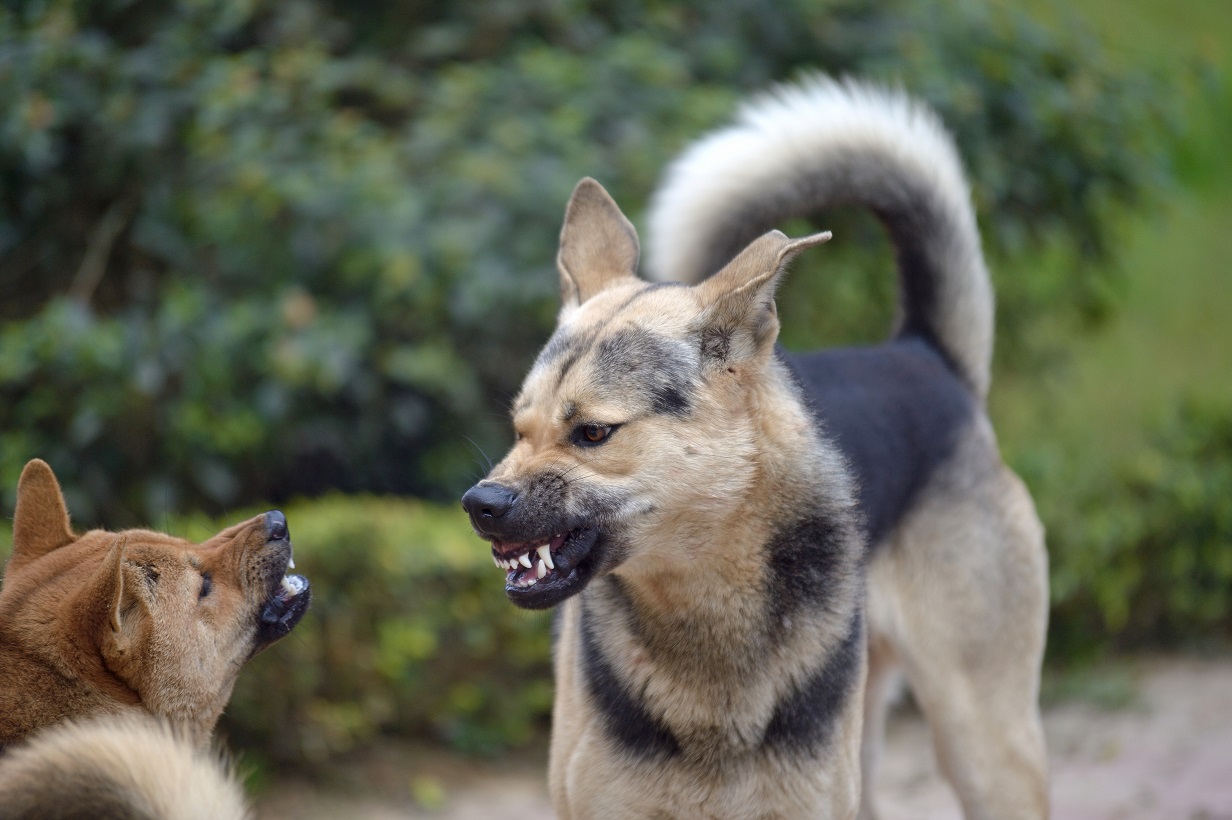
Over the past few years, I’ve lost count of the number of emails I get about dealing with reactive behavior in dogs. So today, I want to touch base on one of the more common questions I had recently, which is… “How exactly do I calm a reactive dog?”
It’s sad to say, but we don’t live in a perfect world. And while we’d all like nothing more to own a well-behaved pooch, the fact is that it’s not always going to be as smooth sailing from the get-go.
Now, nobody wants to deal with an overly reactive dog.
But unfortunately, it happens so often that it can feel like a constant battle to make sure your dog isn’t constantly on the offensive.
Not only that, but it can put a huge strain on the relationship you have with your dog, which can often result in expensive training or in worst cases, even rehoming them.
I speak from personal experience when I say that nobody deserves to go through this frustration. So it’s essential to try and steer your dog away from this behavior before the unthinkable happens.
But here’s the problem…
Hiring a trainer can be very expensive, and to be honest, you don’t really need to.
I’ll explain how in a minute. First, let me talk about WHY your dog seems to be so hard to train…
See, the reason you are having so much difficulty training your dog is that you’ve been training them the outdated way.
It’s not your fault though. The fault really lies with all the bad dog training information that’s out there on the Internet and elsewhere.
Most people start training their dogs using verbal cues or commands like SIT, STAY, etc. Because that’s what they have been taught to do by numerous books on dog training and by all the videos they’ve seen on the Internet.
Here’s the problem – that’s exactly how NOT to train a dog!
Why?
Because it completely ignores the fundamental nature of how dogs understand the world.
See, dogs instinctively respond to leadership and structure. In the wild, dogs naturally follow the guidance of the pack leader. When they don’t sense clear leadership, they feel the need to step up and take charge. And this is where things go wrong in the household setting.
If your dog is reactive, it’s not because they’re just ‘being naughty.’ It’s because they haven’t yet understood that you are the one in charge – the true pack leader. And when your dog doesn’t see you as the leader, they feel the need to take control, which leads to behaviors like reactivity and aggression.
This is why so many owners struggle with training. It’s not about yelling more commands or bribing them with treats – it’s about becoming the calm, confident leader that your dog instinctively wants to follow.
So here’s the deal…
If you’re serious about stopping your dogs reactivity and want to tap into the same proven methods to get your dog to see you as the pack leader, then I’d recommend grabbing a copy of Doggy Dan’s free guide “My Everyday Dog Training Tools”.
Now, just to be clear, this isn’t my book. I didn’t write it. But I’ve partnered closely with Doggy Dan because I truly believe in what he does. Dan’s training approach is unlike anything I’ve seen elsewhere, and I’m a huge advocate of his work because I’ve seen firsthand how effective it is, not only for my own dog. But for so many others struggling with the same challenges.
Again, this book is 100% free, and it dives deep into the exact techniques you need to eliminate reactive behavior by tapping into your dog’s natural pack mentality.
Click Here To Grab Your Free Copy Of My Everyday Dog Training Tools
Doggy Dan is a world-renowned dog trainer who has helped over 100,000 people stop unwanted behaviors like biting, jumping, barking, and more simply by teaching them how to become the trusted leader in their dog’s eyes.
His philosophy is simple yet incredibly powerful: When your dog sees you as the pack leader, they naturally want to listen to you. Obedience stops being a struggle – it becomes second nature.
And here’s the best part?
These techniques work with ANY dog… regardless of age or breed.
From small breeds like Pomeranians and Chihuahuas to large breeds like English Mastiffs and Great Danes. Even puppies as young as 6 weeks old and untrained adult dogs as old as 13 years have been successfully trained using these techniques.
But here’s the thing…
I’m only giving away a limited number of copies of this book, and once they’re gone… they’re gone.
So if you want to discover how to stop your dogs reactive behavior in minutes, using the same natural techniques that pack leaders use to command respect and obedience, go ahead and click the link below to grab your free copy…
Click Here To Grab Your Free Copy Of My Everyday Dog Training Tools & Discover How To Stop Reactivity & Aggression In Minutes… Without Food Bribes, Tricks, Or Force!

Why Is My Dog So Reactive?
In some ways, reactivity is the most natural thing in the world.
Ultimately, it’s a form of awareness.
While we express our emotions, thoughts, and fears by yelling or getting upset, dogs use other ways.
They growl they bark, they snap… they react.
The problem is, it’s a style of communication that’s not always appreciated. It’s especially not appreciated when it’s allowed to go unchecked.
And therein lies the problem.
The occasional growl or bark from your dog might be annoying, but depending on the circumstances, it’s not necessarily dangerous.
But a dog that reacts negatively to certain situations could soon flip the script and decide to go on the offensive. And that’s when the real problems start.
The point here is that ALL reactive behaviors (aggressive or not) need to be treated as equal.
Basically, it all needs to be discouraged.
That said, treating your dog as an individual by figuring out the root cause of their behavior is going to be crucial in determining the right modification technique.
A dog who becomes reactive because they’re scared, for example, may need to be treated quite differently from a dog who becomes reactive because they’re protective.
Before jumping to the solution, take a moment to consider what could be motivating your dog’s behavior.
Some of the most common reasons include:
They Haven’t Been Socialized
Sometimes, reactivity could be a sign that they’ve not been properly socialized.
If dogs aren’t exposed to a wide variety of people, pets, and situations from an early age. They can become anxious or fearful around anything unfamiliar.
Unfortunately, fear and anxiety can often translate into displays of reactive behavior.
The problem is particularly apparent in pups who’ve experienced abuse or traumas in the past. As well as dogs who’ve spent most of their lives being passed from one temporary home to another.
Once dogs like this find a ‘safe-haven,’ they may feel the need to defend it against threats.
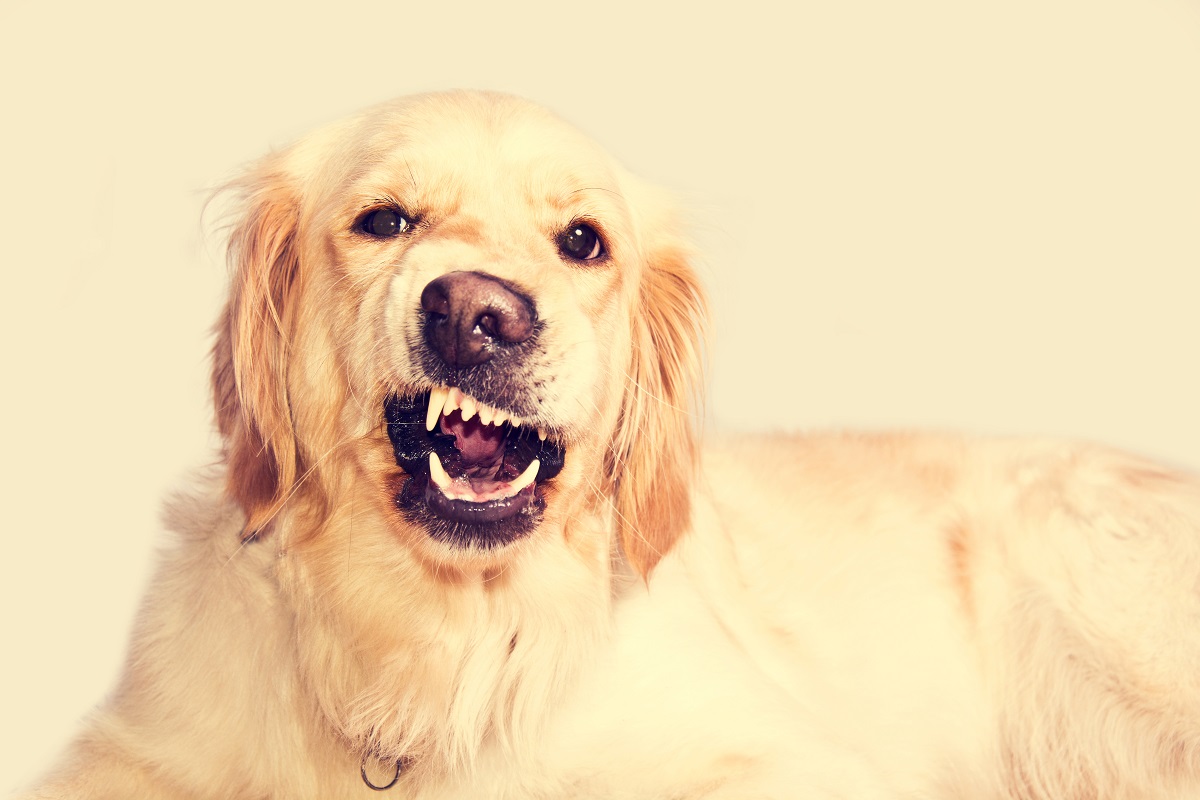
They’re Possessive
All dogs are possessive to an extent (as are humans, when you think about it) but left unchecked, it can quickly develop into a problem.
While some puppies can get super possessive about high-value items like toys or food. Others can get possessive about people.
If your dog thinks they ‘own’ you. They may become reactive or display other undesirable behaviors at anyone who gets in between you and them.
It’s in Their Genes
Herding breeds like Corgis, Collies, and German Shepherds have a higher risk of reactivity than other breeds.
The reason is simple enough. As working dogs, their function was to herd sheep and cattle. And reacting swiftly to certain stimuli was just part of the job.
That instinct is still there… even though it’s a lot less useful than they think it is.
It’s a Habit
It’s not uncommon for some owners to give in and just accept that reactive behavior is part and parcel of being a dog.
Eventually, they come to the conclusion that this type of behavior is just part of the game.
Some owners may even be encouraging the behavior unknowingly.
To make matters worse, an untrained dog often can’t tell the difference between what is and isn’t acceptable.
This is a huge problem, especially with larger, powerful breeds such as Rotties, Dobermans, German Shepherds to name a few.
This is also where the techniques Doggy Dan reveals inside his free copy of “My Everyday Dog Training Tools” really come in handy.
Not only will you learn how to stop unwanted reactive behaviors, but you’ll also discover simple, highly effective calming exercises to keep your dog’s emotions in check.
So if you haven’t had a chance to take a look, here’s the link you need…
Click Here To Grab Your Free Copy Of My Everyday Dog Training Tools & Discover How To Stop Reactivity & Aggression In Minutes… Without Food Bribes, Tricks Or Force!
How to Spot the Signs of Reactivity
Many types of reactive behavior can be passed off as a general warning.
But some types aren’t.
For instance, if a dog happens to react out of fear and frustration and it isn’t managed appropriately. This can easily escalate into aggression.
Worse still, recognizing the difference between what’s intended as a ‘warning’ isn’t always easy.
That said, there are a few telltale signs that give the game away.
When a dog reacts in an aggressive way, they tend to adopt a stiff, rigid posture. They may tense their muzzle and curl their lips to expose their teeth.
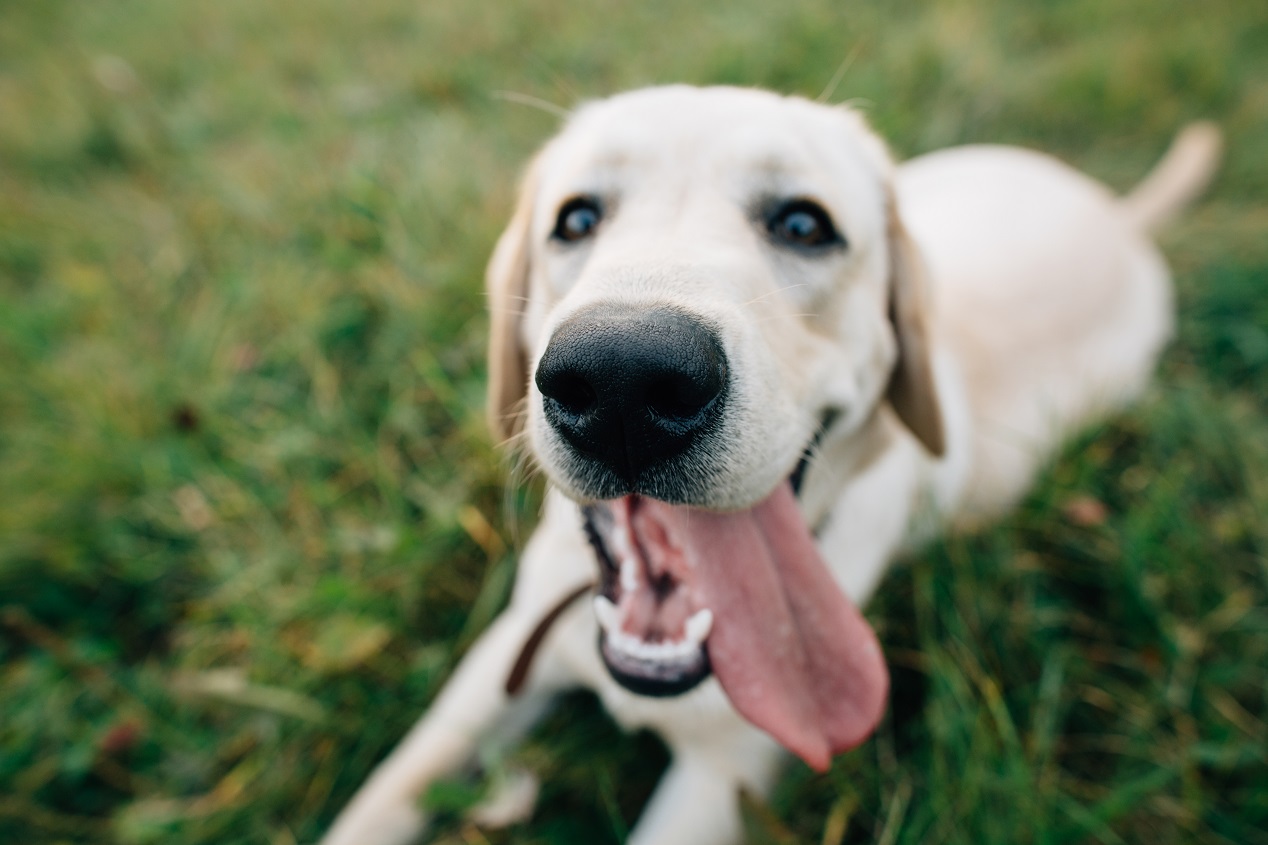
However, dogs who simply want to play will have a loose, relaxed posture.
Both may growl. But whereas a low-pitched, guttural growl is a sign of aggression, a high-pitched, sharp bark is a sign of play.
How to Stop Your Dog Being Reactive
Before you can dial down your dog’s reactivity, you need to identify the root cause.
Although any kind of reactive behavior should be discouraged, different motivations need different treatment.
Consider factors like your dog’s age, whether the behavior is generalized or happens only around guests, and whether your dog displays any other fearful or aggressive behaviors.
When it comes to training, you need to think about the big picture. It might be frustrating when your dog starts demonstrating undesirable behaviors. But the problem is still the reactivity, not the person or thing that’s causing it.
If you want to address the problem, you need to address the problem, period.
For instance, trying to stop your dog from being reactive on walks isn’t going to work if you let them get away with it at home.
Remember, dogs respond to consistency. So be mindful to keep working on discouraging negative behaviors (whether they’re aggressive or not) and encouraging positive ones.
Avoid Provocative Games
Dogs can often become reactive when they’re bored or stressed, so finding a new outlet for their energy is crucial.
Avoid playing games that encourage aggressive behaviors (roughhousing, etc). And stick to games that allow your dog to let off some steam without engaging in any undesirable behaviors.
Dial Back Aggressive Play
If your dog has a habit of becoming reactive during play, you need to set boundaries of what is and isn’t acceptable.
To make things easier, avoid doing things that initiate aggression. Patting the sides of their face, playful nudges, or again, ‘roughhousing’ will just perpetuate the idea that aggression is part of the game.
If they do end up getting riled you while you’re playing, avoid escalating the situation. End the game and take a few minutes to let your dog calm down and relax.
It may seem obvious, but it’s a sure-fire way to dial down the emotion.
Win Your Dogs Mind
Here’s one of the most important lessons that can be summed up in a few simple words…
…” It’s about winning your dog’s mind first”
See, dogs come in all shapes and sizes.
Some are naturally mild-mannered and calm…
…Some can be a little overbearing at times.
…And some are just downright Crazy with a capital “C”
But the one thing they all have in common is they respect the pack leader.
Now, if you’re one of the lucky few, your dog may already see you as the pack leader.
Other times, it may a little time and effort to steer them in the right direction.
And if you’re one of the very unlucky ones (as many are), getting your dog to calm down is about as easy as getting a toddler to take a nap after 6 cans of Redbull.
But no matter what your situation, getting your dog on the path to success will always come down to the same thing…
…Winning their mind.
Flashback to when I was a young inexperienced puppy parent.
It was one of the most stressful times of my life.
And here’s the thing…
It wasn’t that I was applying the wrong training techniques to my pup’s routine.
Far from it…
It was because I was missing the critical step of winning his mind first.
Once I got my head around this, everything instantly fell into place.
This is also why it’s a HUGE MISTAKE to train your dog without first getting to grips with this one core principle.
And it’s effortless once you know how to do it.
Anyway, if you want to hit the ground running and discover how to quickly win your dog’s mind and stop all those frustrating problems that have been driving you insane, click the link below to grab your free copy of “My Everyday Dog Training Tools”.
Not only will you discover how to win your dog’s mind. But you’ll also how to teach your dog to control the natural impulses that trigger unwanted behavior.
Click Here To Grab Your Free Copy Of My Everyday Dog Training Tools & Discover How To Stop Your Puppy Biting In Minutes… Without Food Bribes, Tricks Or Force!
Here’s What You’ll Learn Inside This Free Guide
In the free guide, you’ll discover:
Click Here To Grab Your Free Copy Of My Everyday Dog Training Tools & Discover How To Stop Reactivity & Aggression In Minutes… Without Food Bribes, Tricks Or Force!
What Others Are Saying About My Everyday Dog Training Tools
“This book is fantastic, can’t recommend enough. I can see a difference in my 2yo Bull Mastiff! Very reactive and a nightmare for barking, but following the 5 golden rules, she has turned her behavior around in a matter of days.
Thanks Dan”
– Rebecca Gunby.
———-
“I applied the training and saw huge improvements within a week. We went camping this weekend and she was not reactive at all. I was even able to have her off-leash in our camp spot, and she was an angel.
I highly recommend this training.”
– Brenda Lamont.
———-
“I implemented the 5 very simple tips and saw a difference in my dog within a day. I was honestly shocked. Our walks have become more enjoyable, I understand my dog better now, and he understands that I am the leader with his best interests at heart.
So very very thankful.”
– Sharon Hoque.
Final Thoughts
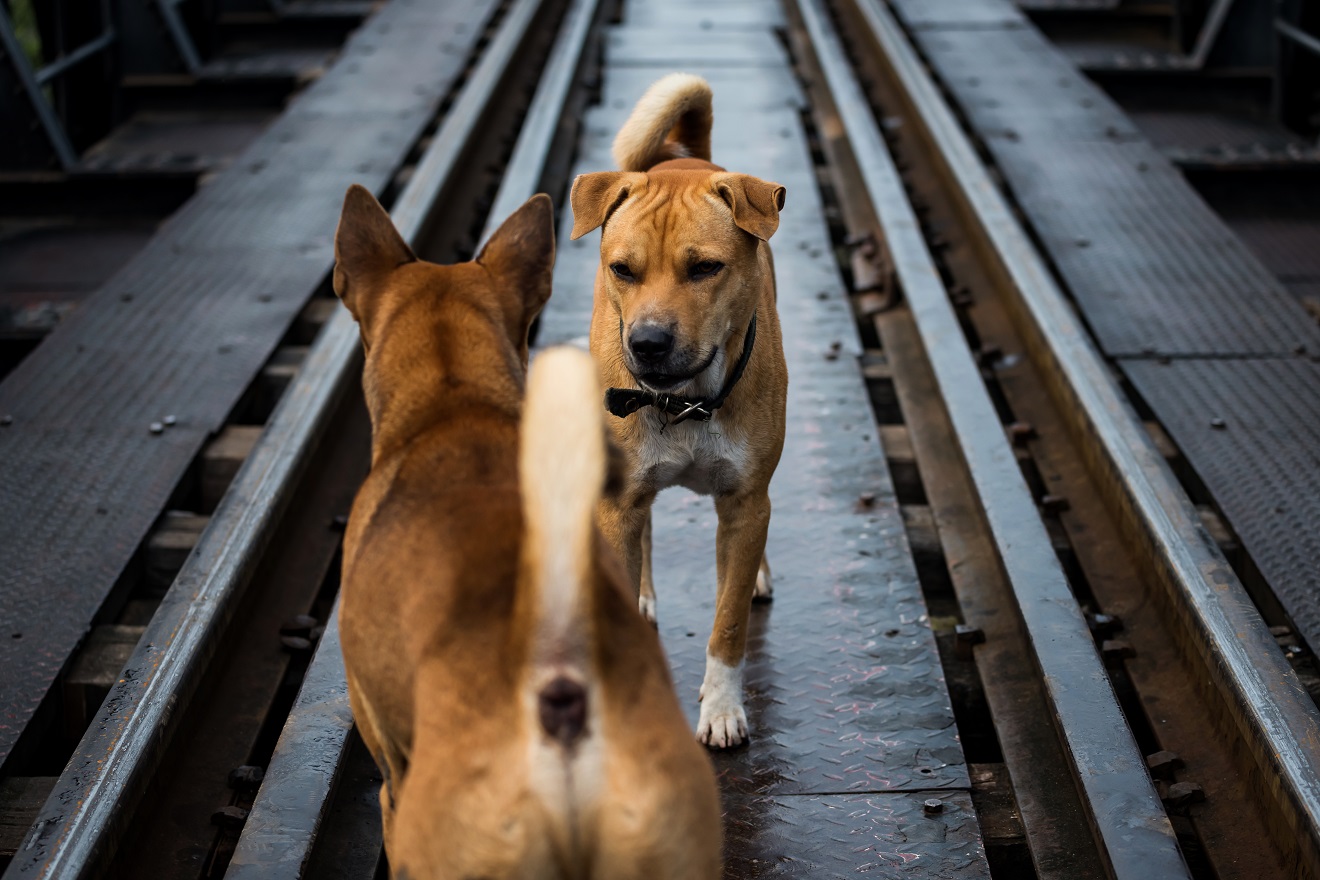
At the end of the day, a dog that demonstrates the odd bout of aggression isn’t uncommon. But that doesn’t mean it’s ok to let it continue.
The sooner your dog learns that aggression isn’t acceptable, the better it will be for everyone.
Not only does it decrease the risk of those mild aggressive traits turning into something more serious down the line. But it also makes it way less embarrassing around others.
Find the root cause and apply the solution. That might be easier said than done, but with a hefty dose of consistency and patience, you’ll get there
Want To Learn 5 Simple Techniques You Can Use RIGHT NOW To Stop Your Dogs Frustrating, Unwanted Reactivity Problem?
Let me ask you this…
- Is your dog’s reactive behavior becoming just a little bit unpredictable?
- Do they constantly go on the offensive at every opportunity?
- Are they always fighting, growling, or becoming aggressive towards other people or dogs?
- Are you scared they’ll cause serious injury to an unsuspecting victim?